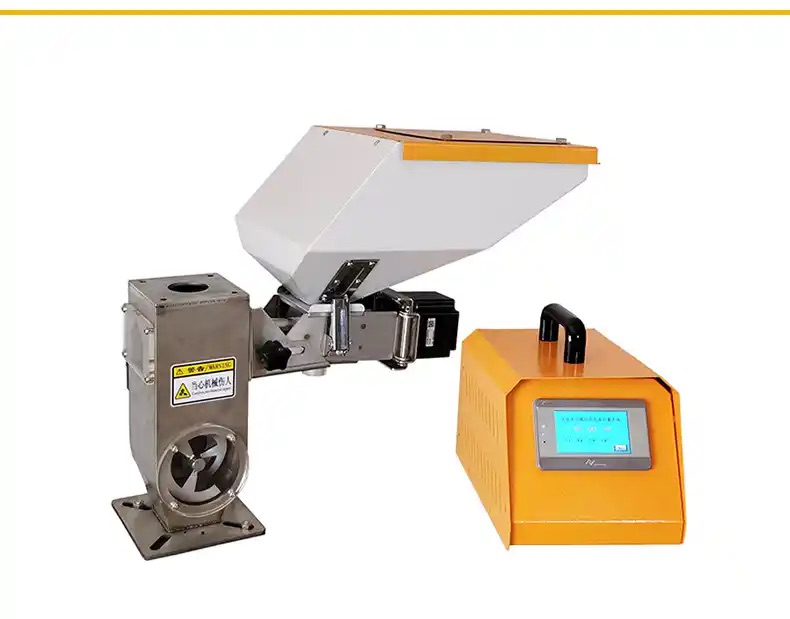
In pigment and color masterbatch production, mixing equipment directly determines product quality, production efficiency, and overall costs. Manufacturers worldwide increasingly favor a specific type of mixer—one designed to address the unique challenges of pigment dispersion, color consistency, and operational efficiency. This article explores the key reasons why this mixer has become the top choice for pigment and color masterbatch manufacturers.
1.Superior Dispersion Quality: The Core Advantage
Pigment and color masterbatch production relies on uniform dispersion to ensure consistent color strength and appearance. Unlike traditional mixers that often leave pigment agglomerates, this specialized mixer features an optimized L-shaped three-layer mixing blade design. Its upper and lower blades gather materials from both ends to the center, while the inner spiral conveys materials from the center to both sides, creating efficient convective mixing and shearing. This design breaks down even hard-to-disperse pigments like carbon black and titanium dioxide, achieving a dispersion uniformity of over 99.3% and eliminating color streaks or spots in finished products.
2.High Efficiency and Time-Saving Performance
Manufacturers prioritize efficiency to meet tight production deadlines, and this mixer delivers exceptional speed without compromising quality. Equipped with high-power copper wire motors, it can mix a batch of materials evenly in just 1-10 minutes, with a digital timing function to ensure consistent mixing cycles each time. Compared to manual mixing or low-efficiency equipment, it reduces mixing time by 40% and supports continuous production, making it ideal for both small-batch customization and large-scale mass production. Its one-click start and integrated control panel also simplify operation, reducing training time for workers.
3.Cost-Effective Operation: Reduce Waste and Expenses
Cost control is critical for manufacturers, and this mixer minimizes waste and long-term operational costs. Its 304 mirror stainless steel contact parts—including the barrel and blades—are smooth and easy to clean, reducing pigment residue and cross-contamination when switching colors. The option to equip multiple barrels allows for quick color changes without extensive cleaning, saving time and raw material waste. Additionally, its energy-efficient motor design reduces power consumption by 25% compared to conventional mixers, while its durable wear-resistant components extend service life to over 5 years, lowering maintenance and replacement costs.
4.Versatility and Compatibility
Pigment and color masterbatch manufacturers work with diverse materials, from organic and inorganic pigments to different carrier resins (PE, PP, PVC). This mixer is highly versatile, with adjustable capacity ranging from 5KG to 10000L to suit various production scales. It adapts to different mixing needs, whether for high-concentration color masterbatch, nano-pigments, or heat-sensitive materials, with precise temperature control to prevent pigment degradation or burning during high-speed operation. Its compatibility with injection molding, extrusion, and other downstream processes ensures seamless integration into existing production lines.
5.Safety and Environmental Compliance
Modern manufacturers prioritize workplace safety and environmental standards, and this mixer meets both requirements. Its fully sealed design prevents dust pollution during operation, protecting workers’ health and complying with environmental regulations like ISO 14001. It also features electronic control protection—if dangerous parts are opened, the main machine shuts down immediately, reducing accident risks. The stainless steel construction is non-toxic and corrosion-resistant, ensuring no contamination of pigments or color masterbatch, making it suitable for food-grade and medical-grade applications.
Conclusion
For pigment and color masterbatch manufacturers, this mixer stands out for its superior dispersion quality, high efficiency, cost-saving operation, versatility, and compliance with safety and environmental standards. It solves core industry pain points—such as uneven dispersion, high waste, and low efficiency—while ensuring consistent, high-quality products. By choosing this mixer, manufacturers can improve production efficiency, reduce costs, and enhance market competitiveness, making it the preferred choice for modern pigment and color masterbatch production.
Post time: Apr-21-2026
