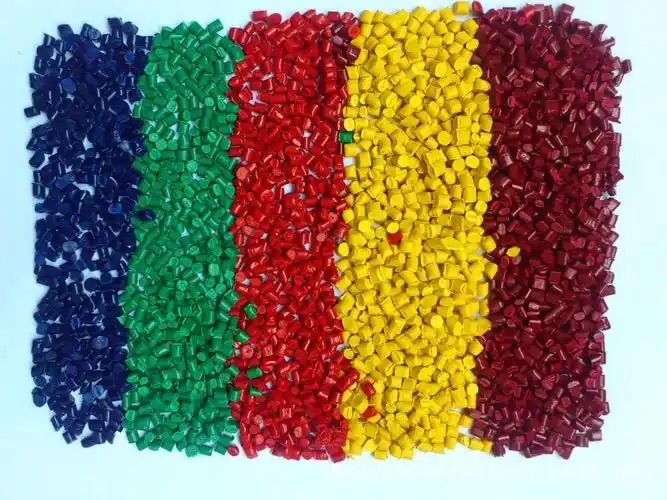
1.The Core Purpose of Masterbatch in Plastic Manufacturing
Masterbatch is a concentrated additive widely used in the plastic industry, and its primary purpose is to provide efficient, stable, and cost-effective coloring and functional modification for plastic products. Instead of directly adding powder pigments or additives into raw resin, masterbatch wraps active ingredients in carrier resin, making them easier to store, transport, and process. This not only ensures uniform performance but also greatly improves production efficiency and product quality.
2.Color Consistency – The Most Basic and Important Purpose
The most common purpose of masterbatch is coloring. High-quality masterbatch ensures stable and uniform color in every batch of plastic products, avoiding color differences, spots, and streaks. For pipes, films, injection molding parts, and packaging materials, color consistency directly affects product appearance and market acceptance. Masterbatch solves the problem of uneven dispersion of powder pigments, achieving precise and repeatable color matching.
3.Improving Product Performance and Durability
Beyond coloring, masterbatch is widely used to enhance the physical and chemical properties of plastic products. Functional masterbatches such as UV-resistant, anti-aging, flame-retardant, antistatic, and antibacterial masterbatches can significantly improve weather resistance, heat resistance, impact strength, and service life. For outdoor PE pipes, agricultural films, and automotive parts, functional masterbatch is essential to ensure long-term stable performance.
4.Cost Reduction and Production Efficiency Improvement
Masterbatch helps manufacturers reduce production costs in two ways. First, it reduces waste caused by uneven dispersion of powder additives. Second, it simplifies the feeding process, reduces dust pollution, and improves production efficiency. In addition, filler masterbatch (such as calcium carbonate masterbatch) can replace part of the resin raw material, further lowering material costs without affecting basic performance.
5.Enhancing Processing Performance and Stability
Masterbatch optimizes the melt flow and processing performance of plastic resins. It improves extrusion and injection molding stability, reduces die buildup, prevents film rupture, and makes production smoother. Good dispersion also reduces equipment wear and extends the service life of screws and molds, lowering maintenance costs.
6.Environmental Protection and Safety Compliance
Modern masterbatch is designed to meet global environmental and safety standards, such as RoHS, REACH, FDA, and food-grade certifications. Non-toxic, low-VOC, and heavy-metal-free masterbatches ensure that plastic products comply with international regulations, making them suitable for food packaging, drinking water pipes, medical supplies, and other high-safety scenarios.
7.Customization for Different Applications
Masterbatch can be customized according to material types (PE, PPR, PVC, PP, ABS), application scenarios, and performance requirements. Whether it is high-temperature resistance for PPR pipes, UV resistance for agricultural films, or high rigidity for PVC profiles, professional masterbatch factories can provide targeted solutions to meet diverse industrial needs.
Conclusion
In summary, the purpose of masterbatch is far beyond simple coloring. It ensures color consistency, improves product durability, reduces costs, enhances processing efficiency, meets environmental standards, and supports customized production. For plastic manufacturers, choosing high-quality masterbatch is the key to improving product competitiveness and achieving stable, efficient, and sustainable production.
Post time: Mar-18-2026
