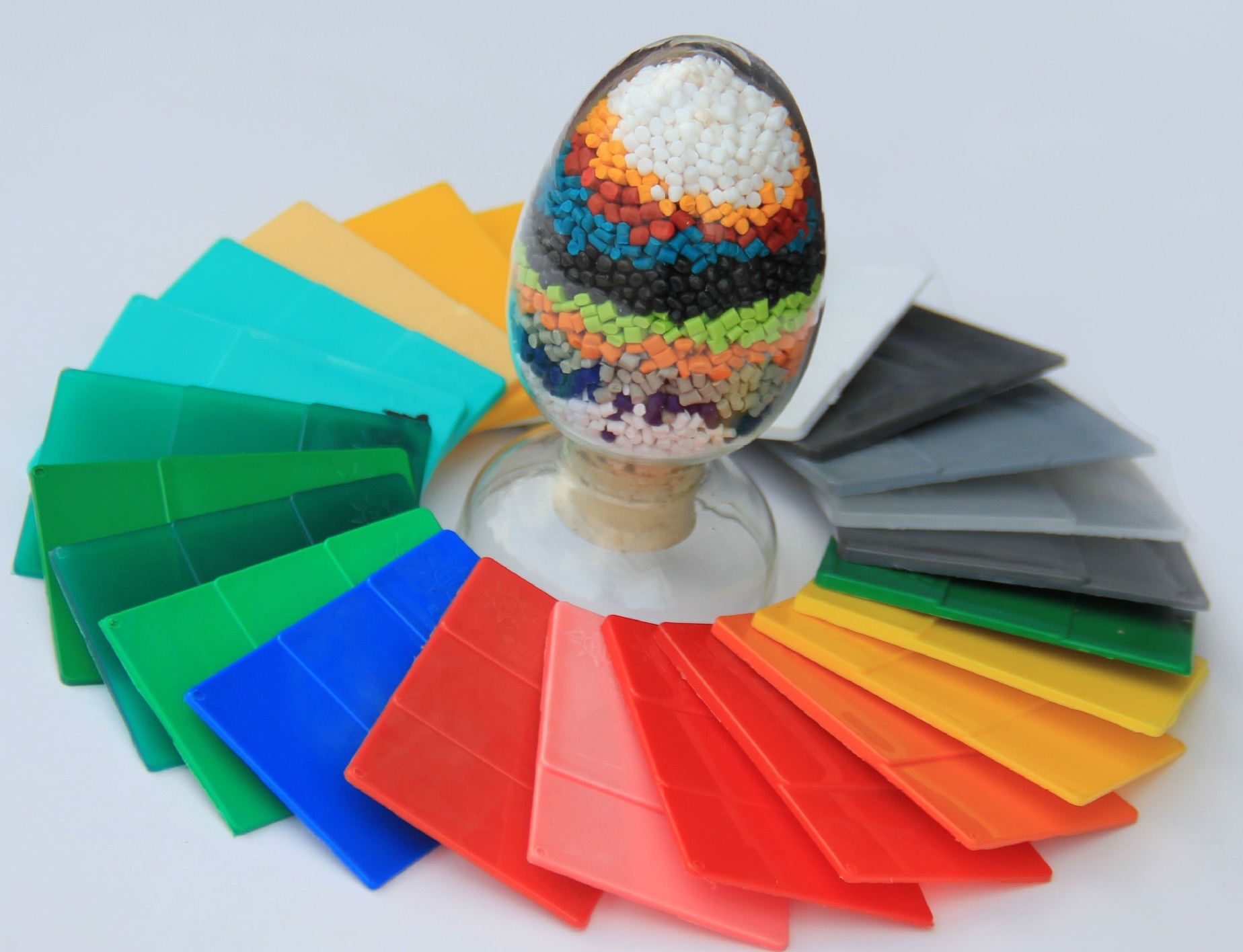
1.Why Automotive-Grade Masterbatches Require Professional Manufacturers
The automotive industry has extremely high standards for material performance, stability, and environmental protection. Automotive masterbatches are widely used in interiors, exteriors, engine compartments, and functional components, requiring excellent heat resistance, UV resistance, weatherability, low odor, high dispersion, and color consistency. Ordinary masterbatches cannot meet automotive specifications, so choosing a professional automotive masterbatch manufacturer is critical to ensuring product qualification and long-term stability.
High-quality automotive masterbatches directly affect the appearance, durability, safety, and service life of vehicles. Professional manufacturers use strict raw material control, mature formula systems, and complete testing capabilities to meet IATF 16949, EU REACH, RoHS, VOC, and other strict certifications. For automotive parts factories, brand suppliers, and mold factories, selecting the right masterbatch partner can reduce risks, improve yield, and enhance product competitiveness.
2.Core Performance Requirements for Automotive Masterbatches
Before selecting a manufacturer, buyers must clarify the core indicators of automotive masterbatches to ensure they meet industry standards.
Heat resistance stability is fundamental. Automotive parts must withstand long-term high-temperature environments without fading, precipitation, or deformation. Masterbatches must maintain stable performance at 80°C–230°C.
Weather resistance and UV resistance are essential for exterior parts. Doors, bumpers, fuel tanks, and decorative parts require anti-UV masterbatches to avoid fading, cracking, and aging after years of sunlight exposure.
Low VOC and low odor are mandatory for automotive interiors. High-standard masterbatches reduce harmful emissions and ensure a safe and comfortable cabin environment.
High dispersion and color consistency ensure no color spots, flow marks, or color differences between batches, which directly affects the appearance quality of automotive parts.
Good compatibility with PP, PE, ABS, PC/ABS, PA, TPO, and other plastic materials ensures stable processing and no material degradation.
3.Key Conditions for Selecting Qualified Automotive Masterbatch Manufacturers
Choosing a reliable automotive masterbatch manufacturer requires comprehensive evaluation of qualifications, technology, equipment, and quality control.
First, verify industry certifications. Formal automotive suppliers must have IATF 16949, ISO 9001, ISO 14001, and comply with VOC, REACH, and RoHS directives. Certifications represent standardized production and quality capacity.
Second, check formula R&D capabilities. Professional manufacturers can develop customized formulas for different automotive parts, provide color matching, modification, and functional solutions.
Third, confirm production equipment and testing conditions. Advanced twin-screw extruders, precision color difference meters, aging test chambers, heat resistance testers, and VOC detectors ensure stable and reliable products.
Fourth, evaluate batch stability control. Automotive mass production requires extremely high consistency. Reliable manufacturers use automated ingredients and online monitoring to ensure ΔE ≤ 0.3.
Fifth, confirm after-sales technical support. Professional teams provide on-site guidance, processing optimization, and fault analysis to improve production efficiency.
4. Classification and Application of Automotive Masterbatches
Professional manufacturers provide targeted products for different automotive application scenarios.
Interior masterbatches are used in dashboards, door panels, seats, and pillars, focusing on low odor, low VOC, good dispersion, and high color stability.
Exterior masterbatches are used in bumpers, grilles, decorative strips, and rearview mirror shells, emphasizing UV resistance, weatherability, and heat aging resistance.
Under-hood functional masterbatches require ultra-high heat resistance, oil resistance, and aging resistance to adapt to harsh environments.
Special functional masterbatches include conductive, anti-static, antibacterial, and light diffusion types, meeting high-end automotive intelligent and lightweight demands.
5.How to Efficiently Cooperate with Automotive Masterbatch Manufacturers
To achieve stable supply and high-quality matching, buyers can follow these steps.
First, provide material type, application location, processing technology, and performance requirements for accurate formula development.
Second, request samples for testing, including color difference, dispersion, heat resistance, weatherability, and odor evaluation.
Third, conduct factory audits to confirm certification, production lines, laboratory, and quality system.
Fourth, carry out small-batch trial production to verify batch stability and processing performance.
Fifth, sign long-term cooperation agreements to ensure stable supply, continuous R&D, and cost optimization.
6. Conclusion: Choose Professional Manufacturers for Automotive Masterbatch Solutions
Automotive masterbatches are high-standard, high-tech customized products. Selecting a professional, certified, and stable manufacturer is the core guarantee of quality. A reliable partner can provide safe, environmentally friendly, durable, and consistent masterbatch products to meet the stringent requirements of the automotive industry.
For automotive parts suppliers and brand factories, long-term cooperation with professional masterbatch manufacturers helps improve product quality, reduce failure rates, and enhance market competitiveness. With the rapid development of the global automotive industry, high-standard masterbatch suppliers will become important strategic partners for the entire industry chain.
Post time: Mar-03-2026
