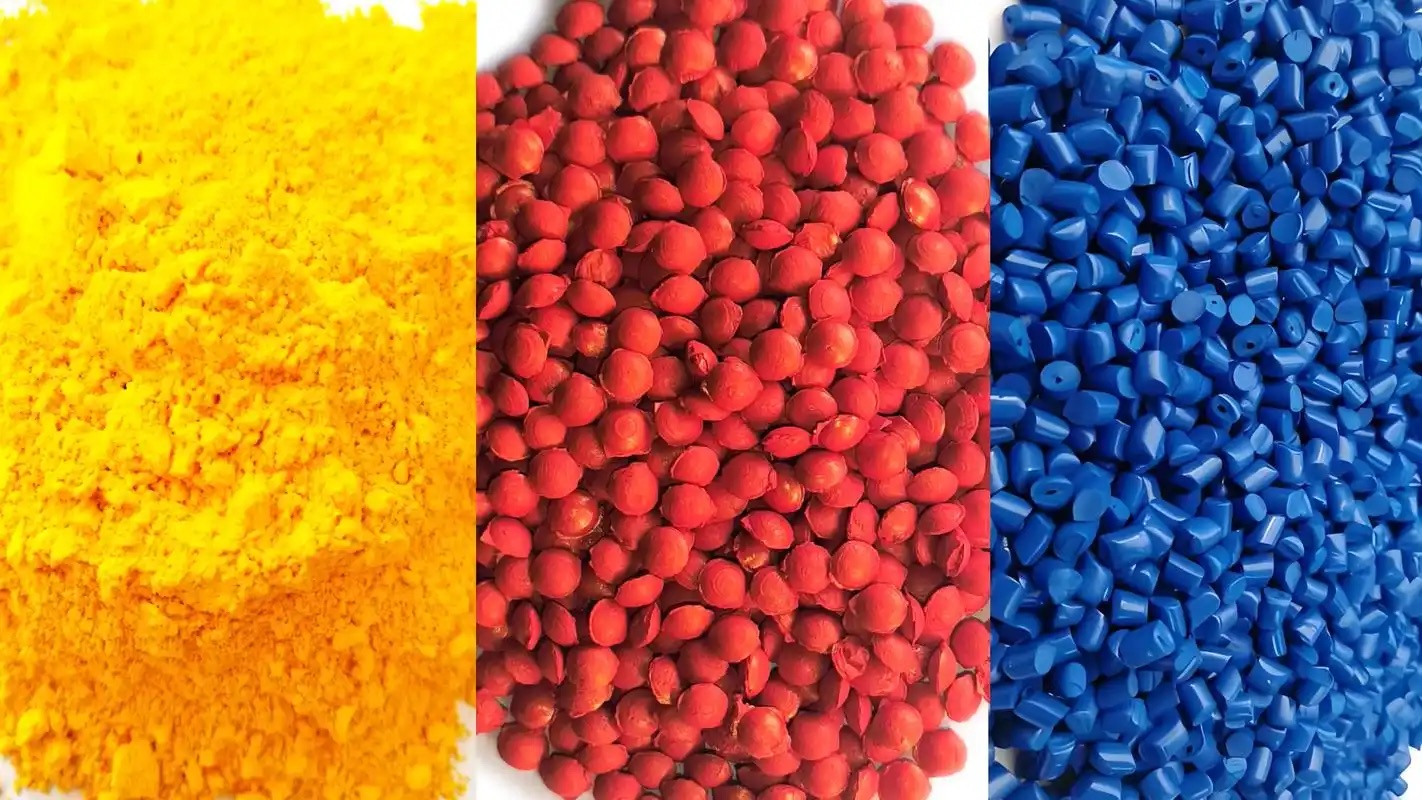
1.Definition & Basic Composition
In the plastic processing industry, Masterbatch (also known as color concentrate or additive concentrate) is a highly concentrated additive blend. It is made by mixing pigments, additives, or fillers with a carrier resin (such as PE, PP, PVC) and dispersants through high-temperature mixing, extrusion, and pelletization.
Think of masterbatch as a “concentrated nutrient pill” for plastic raw materials. Directly adding pigment powder often leads to uneven dispersion and dust pollution. Masterbatch, however, encapsulates active ingredients within a carrier resin, ensuring precise and uniform distribution during plastic processing.
2.Core Advantages Over Direct Powder Addition
Why use masterbatch instead of just mixing powder pigments directly? The key benefits are:
Superior Dispersion: Pigments in masterbatch are pre-ground and dispersed uniformly. When added to resin, they ensure consistent color without spots or streaks, which is critical for pipes and films.
Clean & Safe: Masterbatch in pellet form eliminates dust pollution, creating a healthier work environment and preventing equipment clogging.
Accurate Dosing: Standardized masterbatch allows precise control of addition ratio (usually 2-5%), ensuring batch-to-batch consistency and eliminating color variation.
3.Common Types of Plastic Masterbatch
Masterbatch is categorized by function:
Color Masterbatch: The most common type, used to add color while potentially providing UV protection or anti-aging properties.
Filler Masterbatch: Contains fillers like calcium carbonate or talc. Its primary purpose is cost reduction, while also improving rigidity and dimensional stability.
Functional Masterbatch: A diverse group including UV-resistant, anti-aging, flame retardant, and antibacterial masterbatches, designed to enhance specific material properties.
4.The Critical Role of Masterbatch in Plastic Products
Masterbatch’s role goes far beyond coloring. It is an essential performance optimizer.
For PE/PPR/PVC pipes, special UV-resistant masterbatch blocks UV rays to prevent brittleness and fading. Heat-resistant masterbatch ensures stability in hot water systems. For agricultural films, anti-aging masterbatch significantly extends service life. High-performance masterbatch is the backbone of durable plastic products.
5.How to Choose High-Quality Masterbatch
When selecting masterbatch, consider:
Compatibility: The carrier resin should match the base plastic (e.g., use PE carrier for PE pipes) to avoid defects.
Dispersion Quality: Check for uniform particle distribution; poor dispersion causes surface blemishes.
Heat Resistance: Ensure the masterbatch can withstand extrusion temperatures without degrading.
Certifications: For food contact or water pipes, select products meeting FDA, GB 4806, and other safety standards.
Conclusion
In short, masterbatch is the “soul ingredient” of the plastic industry. It efficiently, cleanly, and stably imparts color and special properties to plastics, serving as the crucial bridge between base resins and final products. For plastic manufacturers balancing quality and cost, partnering with a reliable masterbatch supplier is the first step to producing high-quality goods.
Post time: Mar-24-2026
