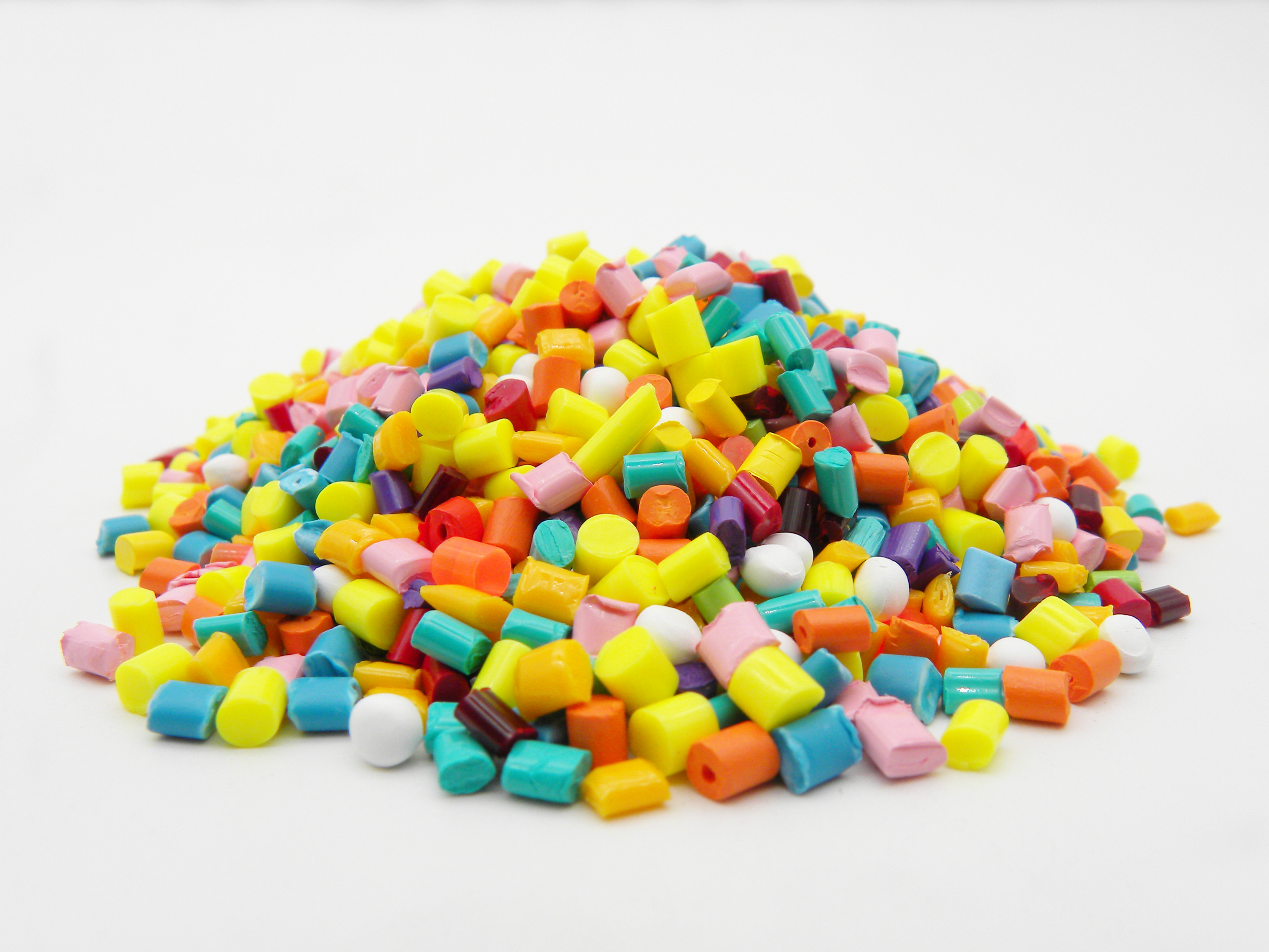
Masterbatch is a concentrated mixture of pigments, carrier resins and additives, which is essential for coloring and functional enhancement of plastic products. However, different plastic processing methods (pipe extrusion, film blowing, injection molding) have distinct requirements for masterbatch performance. Choosing the right masterbatch not only ensures uniform coloring and stable product quality but also reduces production defects and costs. This guide focuses on the core selection criteria for masterbatch in three common scenarios, helping purchasers and manufacturers make informed decisions.
1. Masterbatch Selection for Pipe Molding
Pipes (especially PVC-U, PE, PP pipes) require masterbatch with excellent weather resistance, pressure resistance and dispersion. First, prioritize masterbatch with compatible carrier resin—PVC masterbatch for PVC pipes and PE masterbatch for PE pipes—to avoid poor dispersion and pipe brittleness. Second, select pigments with strong UV resistance and light stability, as pipes are often used outdoors and need to resist sunlight aging without fading or discoloration for 5-10 years. Third, ensure good dispersion to prevent pigment agglomeration, which would cause uneven pipe surface and affect pressure-bearing performance. The recommended addition ratio is 2%-5%, and the masterbatch should meet RoHS and GB standards.
2. Masterbatch Selection for Film Blowing
Film blowing (such as PE plastic film) has strict requirements for masterbatch’s dispersion and transparency. The masterbatch must have ultra-fine pigment particles (below 1μm) to avoid affecting the film’s transparency and surface smoothness. Choose low-melting-point dispersants to ensure the masterbatch melts quickly and mixes evenly with the base resin during film blowing. For food packaging films, select food-grade masterbatch that meets FDA and EU 10/2011 standards, with no harmful substance migration. For outdoor films, add anti-UV additives to extend service life. The addition ratio is usually 1%-3% to avoid affecting the film’s toughness and tensile strength.
3. Masterbatch Selection for Injection Molding
Injection molding products (toys, household appliances, auto parts) require masterbatch with good fluidity, heat resistance and color consistency. The masterbatch’s melting point should match the injection molding temperature (150-250℃) to prevent decomposition and discoloration at high temperatures. Prioritize masterbatch with high color fastness to avoid color migration during injection molding. For complex-shaped products, choose masterbatch with excellent fluidity to ensure full filling of the mold. For food-contact or medical injection products, use non-toxic, lead-free masterbatch with relevant certifications. The addition ratio ranges from 2%-4%, depending on the product’s color requirements.
Common Selection Principles for All Three Scenarios
Regardless of the processing method, three principles must be followed: First, check the masterbatch’s quality certification, including third-party test reports and SDS documents, to ensure compliance with international standards. Second, test samples in advance—mix the masterbatch with base resin according to the ratio, and test the product’s color uniformity, performance and stability. Third, choose reliable suppliers who can provide technical support and stable supply, avoiding low-quality masterbatch with recycled materials that cause product defects.
Conclusion
Choosing masterbatch for pipe, film blowing and injection molding requires targeting the characteristics of each processing method. For pipes, focus on weather resistance and pressure resistance; for film blowing, prioritize dispersion and transparency; for injection molding, emphasize fluidity and heat resistance. By adhering to compatibility principles, checking certifications, and conducting sample tests, you can select cost-effective masterbatch that meets production needs, ensuring stable product quality and improving production efficiency.
FAQ for Masterbatch Selection
Q1: What masterbatch carrier is suitable for PVC pipe molding?
A1: PVC carrier masterbatch is the best choice, as it has good compatibility with PVC pipes and avoids poor dispersion and brittleness.
Q2: What requirements does film blowing masterbatch have for pigment particle size?
A2: The pigment particle size should be below 1μm to ensure the film’s transparency and surface smoothness.
Q3: How to choose masterbatch for food packaging film blowing?
A3: Select food-grade masterbatch that meets FDA and EU 10/2011 standards, with no harmful substance migration.
Q4: What is the recommended addition ratio of masterbatch for injection molding?
A4: It ranges from 2% to 4%, depending on the color requirements of the injection-molded products.
Q5: What should be paid attention to when choosing masterbatch for outdoor pipes?
A5: Prioritize masterbatch with strong UV resistance and light stability to resist sunlight aging and avoid fading.
Post time: May-21-2026
